Chard
Culinary Use, Storage, & Benefits
Vegetable Profile: Chard (Beta vulgaris var. cicla)
Description
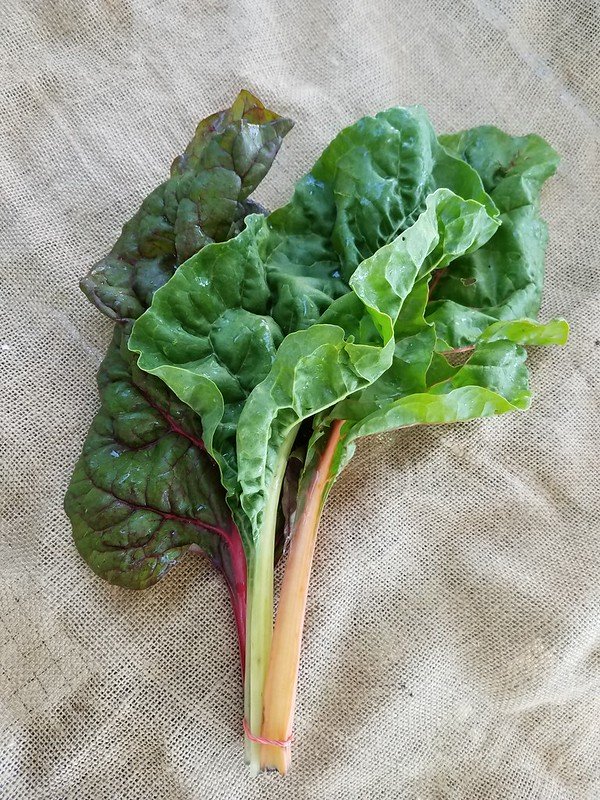
Chard is sibling to beets, having been developed for its broad leaves and crunchy stems rather than its root. It’s also like a cousin of spinach, but unlike spinach, it weathers the heat of summer quite well. It originated in the Mediterranean region, and is a member of the Amaranth botanical family. It has a salty, bitter flavor similar to that of other members of its family. It's an exceedingly tender, dark leafy green.
Nutrition
Chard supports healthy blood production by nourishing the stomach, spleen, large intestine, lungs, and liver. It is high in minerals and carotene antioxidants. When eaten fresh, it contains vitamin C. When cooked, its calcium and magnesium becomes readily available. It has a cooling action and helps soothe inflammation.

Storage
Chard is somewhat delicate, dramatic – if allowed to wilt, it will do so quick. It stores best in a waterproof container in the fridge for 3-4 days. It also freezes well for cooking.
Use
Best when sauteed with olive oil or bacon grease, soy sauce, and garlic! pairs well with eggs, chicken, tempeh, or pork. You can also finely chop it and add it like confetti to a salad!
Sources:
The New Whole Foods Encyclopedia by Rebecca Wood
Asparagus to Zucchini by Fairshare Coalition
Produce: A fruit and vegetable lover's guide by Bruce Beck
Our own experience!

SCIENTIFIC NAME:
Beta vulgaris
VARIETY:
"Bright Lights”. Superior mix with uniform leaf shape, bolt resistance, and consistent growth rate. Multicolored stems of gold, pink, orange, red, and white. Super easy to grow, looking beautiful in the garden, and abundant yields of tender, yet freezer friendly greens! Seed source and photo: Johnny’s Selected Seeds
CULTURE:
Chard appreciates loose well drained soils with acidity between 6.2 and 6.8, but will tolerate 6.0-7.5 and a wide range of soil textures. Heavy clay soils can be helped by the addition of organic matter. Plants require at least 12-18 square inches of garden space to mature properly.
See chard benefits, tips, & more!