The “New Land”: Farm Transition Update
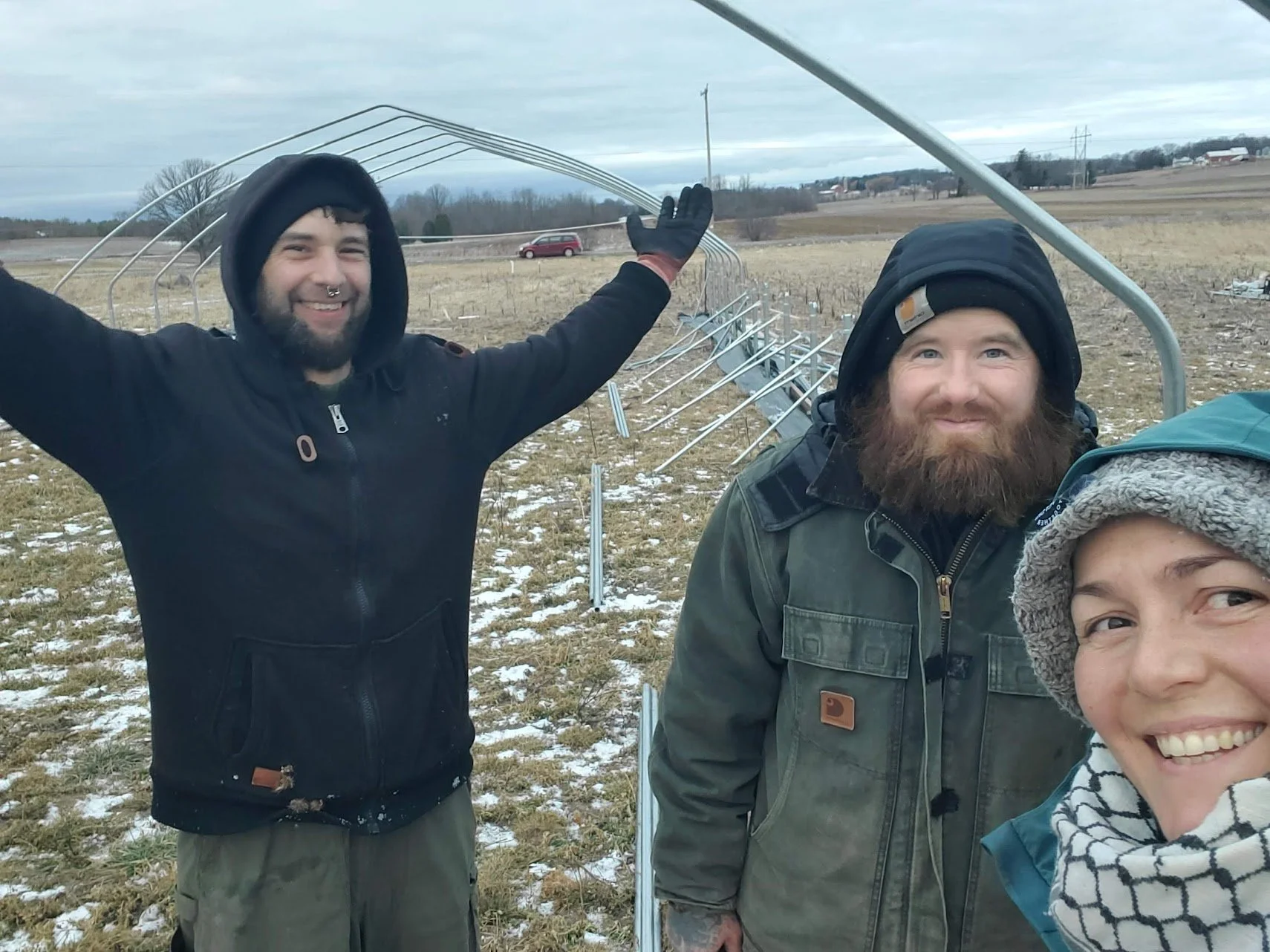
Al, Amirah, and Caleb at the new land!
Hello all and happy spring!
As many of you already know, we have been planning a farm transition from the Wellspring campus of Riveredge Nature Center where we’ve grown for 10+ years to the “new land” that we bought in Allenton (West of West Bend).
History of the new land: It was previously farmed in a rotational grazing system by Dominion Valley Farm. It is a 28 acre parcel of highly variable land, ranging from wetland to woods to a large, steep hill. About 14 acres of it is arable land. Once the previous farmers retired, those 14 acres were put into corn and soy production. There was no pre-existing infrastructure on the land, so no well, no house, no driveway, no address! We are truly building this from the ground up, which has its advantages:
We can optimize the layout and design for efficiency based on the features of the land, and our needs. This will help keep maintenance costs manageable, and we don’t have to worry about lead-based paint or black mold remediation common in old buildings
We ran the numbers, and if the estimates hold up through inflation, tariffs, and now the oil crisis, it will be cheaper to build new than to buy. Even fixer-uppers are still expensive these days, and that’s not counting the cost of any repairs needed.
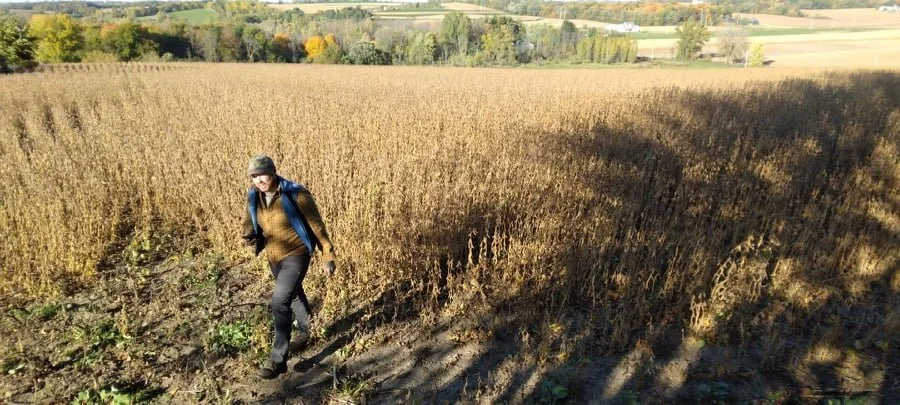
Farmer Caleb in 2022, view from the top of the hill
So what are the disadvantages, you ask? Well, many of things I just mentioned. While we have leveraged every last resource out there for young and beginning farmers, it’s extremely difficult to keep up with the changing economic landscape. It’s also a ton of work, even in the best of times. But we’re doing it anyway.
Here’s a timeline recap:
2022:
Land bought on a loan via the FSA beginner farmers loan and Compeer financial. Soil tests showed no heavy metal contamination and decent levels of key nutrients and organic matter.
2023:
Established alfalfa, a perennial ground cover, and began the 3-year process to transition the land from conventional agriculture to organic
2024:
Collaborated with NRCS, Full Circle Design, and Regenerative Agriculture Alliance for technical assistance to plan for: pollinator strips, windbreak tree planting, design for Tree-Range poultry production on the hill.
Hired an architect for blueprints for a house and garage, in strict accordance with both the FSA loan requirements and local ordinances (not too big, not too small)
Worked as our own contractor to collect quotes from subcontractors and submitted the budget proposal for a building loan
Planted trees
Began the process of moving over equipment, including chicken coops.
2025:
Architect plans rejected by loan officers. Went back to the drawing board to make modifications.
FSA loan officers visited and assessed the building site.
Adjusted quotes based on new plans with subcontractors and re-submitted the project for the loan application
Erected the first high-tunnel frame
2026:
The loan process has been extremely slow due to government shut downs and the cutting of federal funds. We are still waiting to hear back on our second proposal.
Second high-tunnel erected
More trees being planted
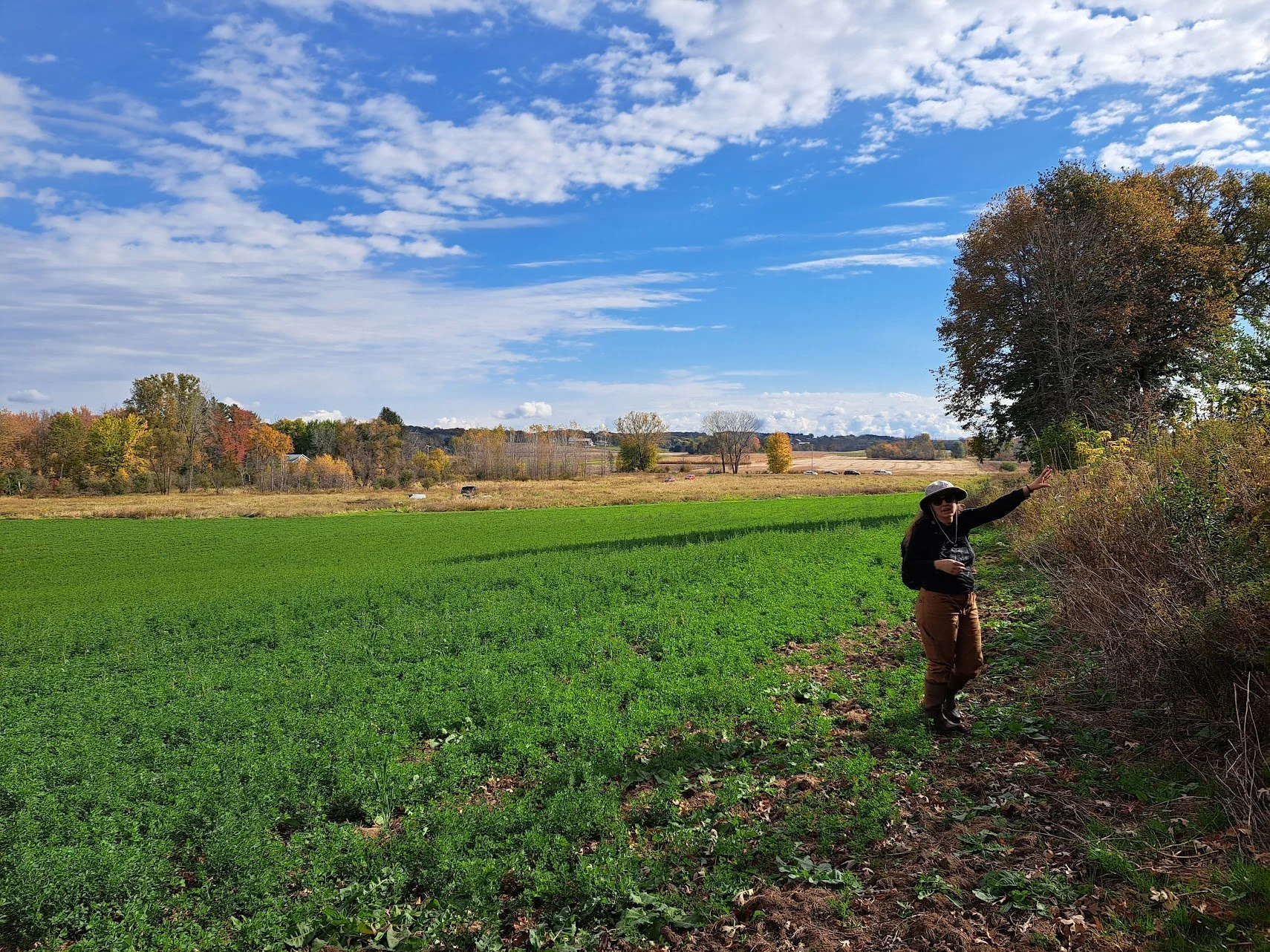
Rox in the established alfalfa field assessing the windbreak
That’s about where we’re at right now. Updates have been sparse because, well, we don’t have much to announce. Our initial plans would have had us fully transitioned by this year.
The setbacks have been tough. Pushing this forward, driven by farming as our sole income, and as two full-time working parents has been harder than we like to admit. Add in the major disruptions from the federal level and we’re up against things that are out of our control.
We’re so grateful for those who have maintained support our farm through these challenges. That includes all of our members who keep our farm going, staff and workershares who inspire us all the time, and especially Riveredge Nature Center for generously extending our lease so we can keep farming continuously as this transition baby steps forward.
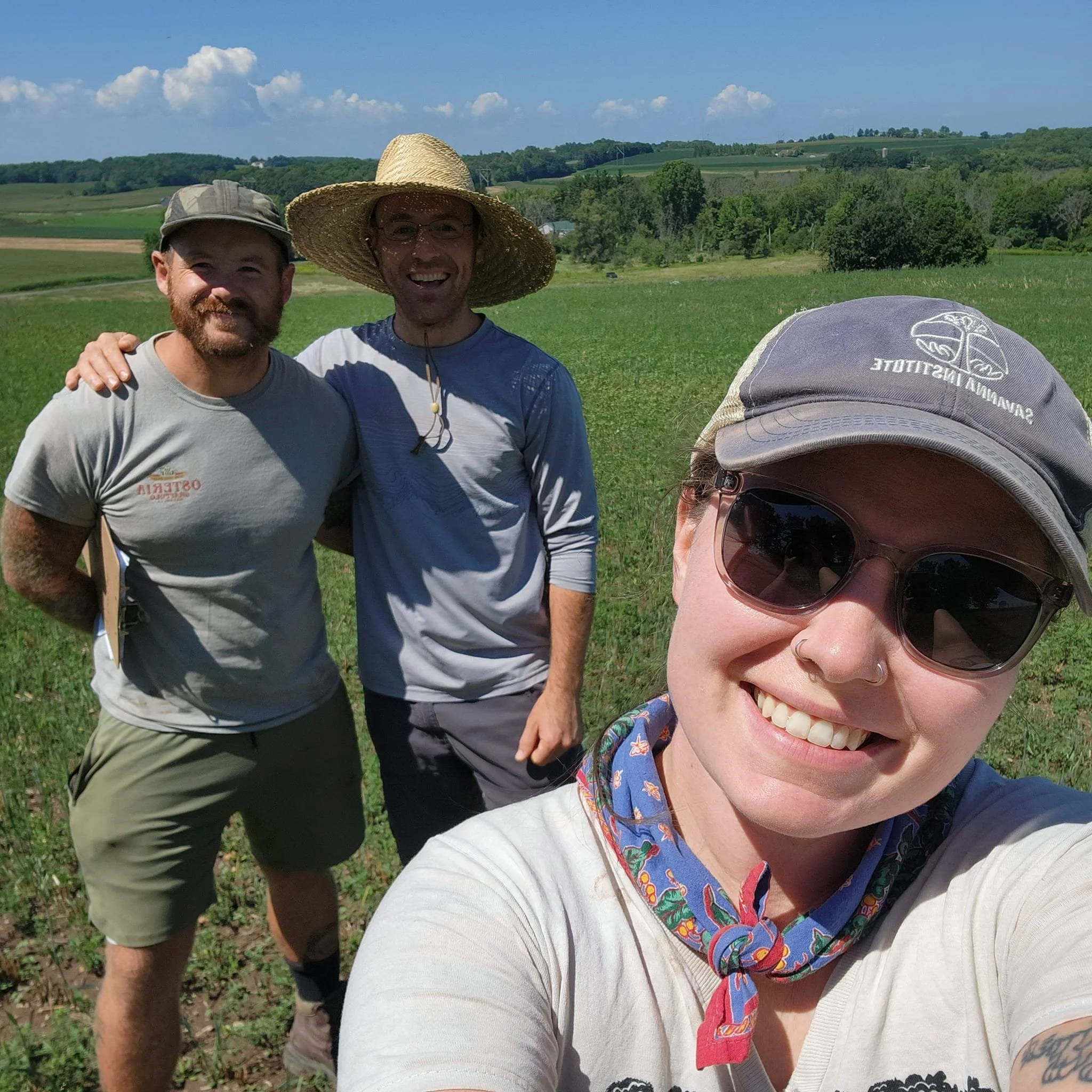
Site walk with Drew Carlson of Full Circle Design
So, what is the vision we’re working towards? Once we get the first bases covered, including water access, driveway, address, and basic infrastructure, we have big plans.
We will continue the Winterspring CSA, pretty much as-is, serving the same pick-up sites and farmers markets.
We are planning to launch a sister-farm business: Henship Hill Farm, a Tree-Range poultry production unit on the hill that will produce broiler chickens and tree crops such as elderberry and hazelnut
We hope to host on-farm events, such as workshops, U-pick, and farmer training intensives to pay it forward for folks looking to enter the field (haha) of organic and sustainable agriculture
FAQ: What if we get turned down for the building loan again?
We’ll cross that bridge when it comes, but we’ve been looking into a few different options for renal/community housing. Unfortunately, these opportunities are few and far between in the area. Hopefully, as we continue to pay down the debt we carry for the land itself, the opportunity to build would open up eventually.
FAQ: What about doing a fundrasier?
We haven’t done any fundraising for this transition at this point because there is truly so much dire need in this country at the moment that it feels weird to organize that for ourselves right now. Especially for housing. We want to be able to do this ourselves if possible, or as a collective/cooperative housing effort. If anyone has any ideas or would like to help on this front, reach out to us!
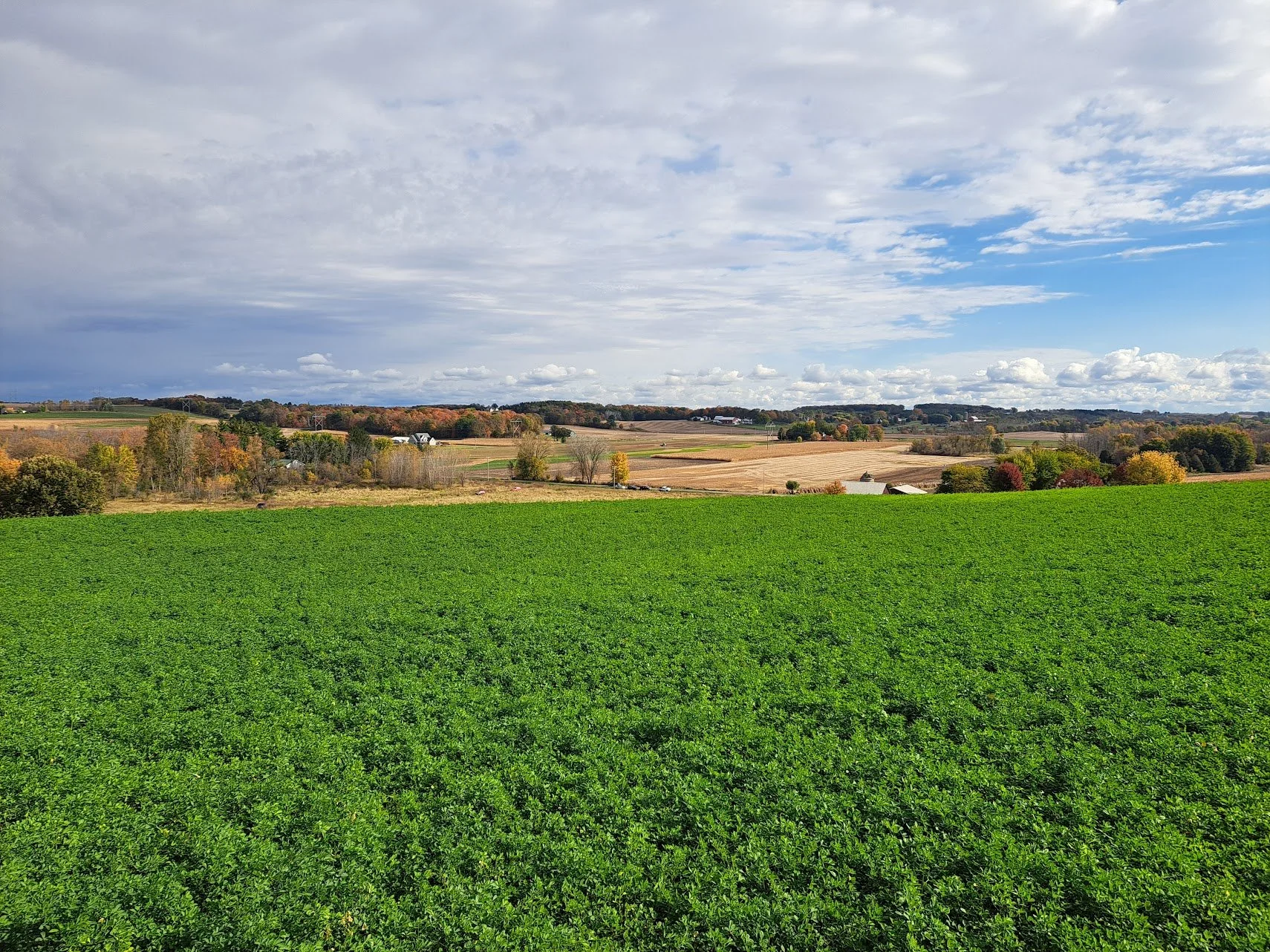
View from the future site of Henship Hill Farm
I hope this answers some questions that we regularly get about his transition process. We will update more as we have news. For now, the best ways to support Winterspring Farm in a successful transition are:
Buy a CSA share, which are available now until whenever we fill up (typically in March or April!).
Shop the seedling sale now until May. Check out our new, limited addition T-shirts and other farm swag there as well.
Tell your friends and family who appreciate good organic produce.
Visit us at either West Bend or Fox Point farmer’s markets.
Keep engaging with our posts on social media.
All of this adds up, and we wouldn’t be here without our community. We now have until the end of 2027 now to make the leap over there, so our first season growing at the new farm would be 2028. Thanks everyone who believes in us, and as long as we are able, we won’t give up growing the best food we can!
In solidarity,
Farmers Caleb and Roxanne