Basil
Culinary Use, Storage, & Benefits


Herb Profile: Basil (Ocimum basilicum)
Description
Basil is the MVP of our herbs on the farm, and for good reason. It’s the most popular! It’s a classic ingredient in Italian, Indonesian, Thai, and Vietnamese cuisine. There are so many different varieties that each offer their own unique aroma, texture, flavor, and appearance. As certified organic growers, we opt for growing varieties that have been selected for natural disease resistance, rather than using fungicide to control diseases. The seeds themselves are also certified organic, ensuring that no systemic treatment has been applied and that the plants have been tested for performance in organic production. The two types of basil we typically offer include:
Genovese type. These are the classic Italian variety. Best for making pesto, caprese or cooked fresh rather than dried. Large to medium leaves, juicy and succulent. The specific variety changes somewhat season to season, as new and improved seeds are released.
Purple type. These are more closely related to Genovese in flavor, but are lower in moisture content and are therefore easy to dry without bruising or browning. Perfect as a substitute for Genovese, or for “purple” herbal salt and seasonings.
We also grow Tulsi, AKA Holy Basil. Click here fore more on tulsi.

Nutrition
Basil is a warming, drying herb that supports the kidneys, liver, stomach, spleen, and large intestines. High in antioxidants. It also can help calm the nerves and relieve tension. As a digestive aid, it supports healthy metabolism and nutrient assimilation in the gut.
Storage
You can extend the flavors of the season and get the most out of your CSA share by having a few good storage methods on hand. Basil is generally more fragile than most herbs. It does not tolerate being in the refrigerator with the rest! Instead, choose one of the following:
Place it in a cup of water out of direct sunlight and use within a couple of days.
Dry it for seasonings and herbal salts. For seasonings, use a dehydrator at the lowest heat setting. It should be crisp within two days. For herbal salt, chop and pack it in generous layers of salt. Let sit for a few days. Then spread out the salt and herbal mixture on a cookie sheet and bake at 300 degrees for an hour. Blend and store.
Freeze it for later use in sauces by spreading it out on parchment paper on a baking sheet and place lying flat in a freezer. Set a timer for 2 hours. Pack frozen leaves in a freezer bag and label. This helps prevent the leaves from matting together and developing brown spots due to a slower freezing process.
Make herb oil cubes by blending your favorites like basil, garlic, chives, or parsley together with olive oil and pour into ice cube trays. Place it inside a labeled freezer bag and freeze lying flat. When they’re fully frozen, remove them from the tray and place in a labeled freezer bag.
Use
There are a lot of iconic recipes that just wouldn’t be the same without basil. Here are some, and I’m just naming a few:
PESTO!
Bruschetta
Margherita pizza
Pho, a Vietnamese noodle soup
Thai Basil Stir-fry
Ratatouille
When it comes to using fresh culinary herbs, have fun with it. You don’t need a recipe for permission to chop it up on top of scrambled eggs with some salsa, toss it in a pot of tomato sauce, put it on salads and sandwiches. This is the “use it up” mentality, and sometimes it’s possible to come up with your new favorite lunch just by using what you have.
Grow the Best Basil of Your Life: Farmer Rox Writes
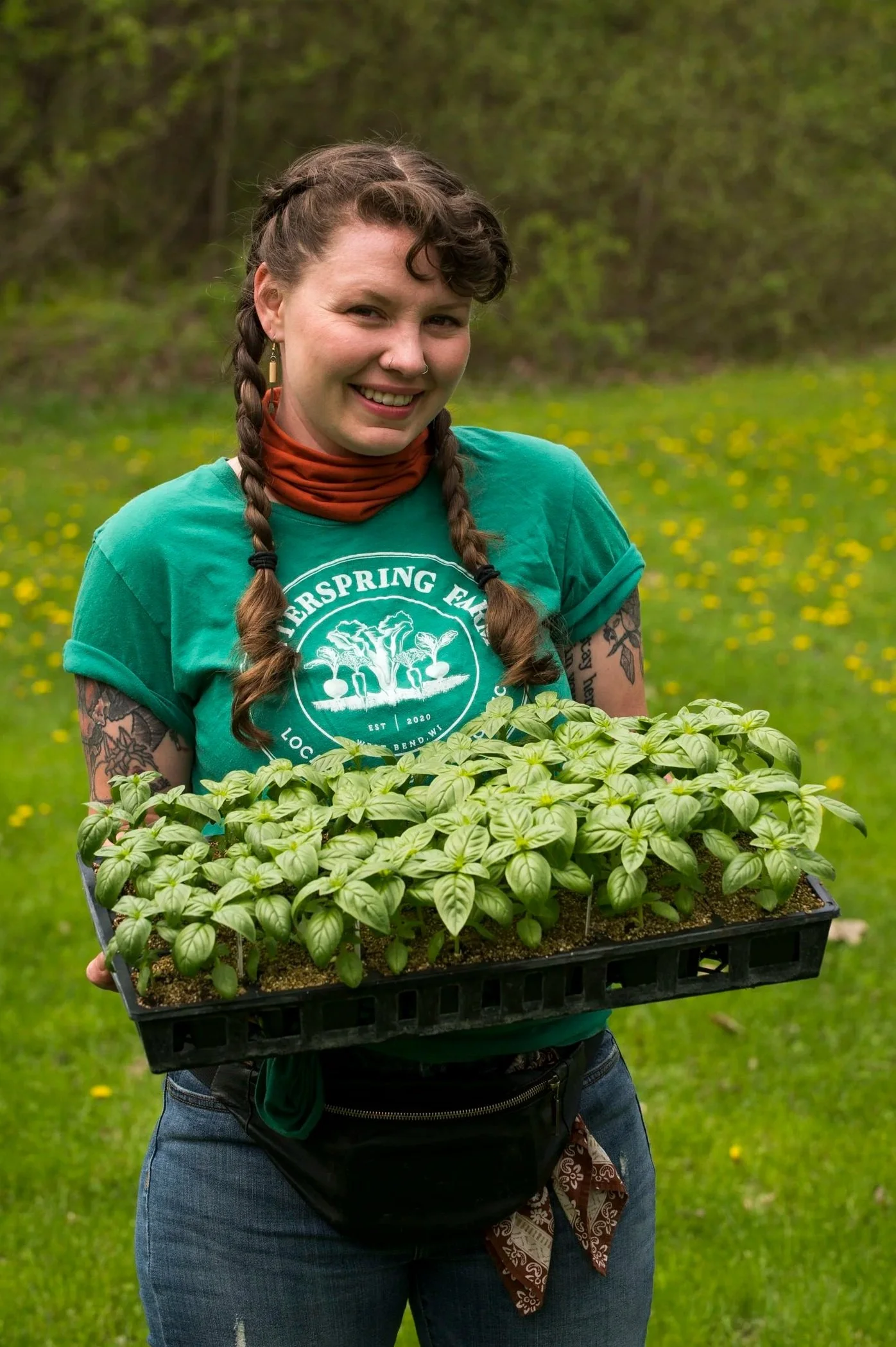
Join me on substack for more on growing basil for your home or business.
Sources:
New Whole Foods Encyclopedia by Rebecca Wood
The Gift of Healing Herbs by Robin Rose Bennett
The Rodale Encyclopida of Herbs
Asparagus to Zucchini by Fairshare Coalition
Our own experience!



SCIENTIFIC NAME:
Ocimum basilicum
VARIETY:
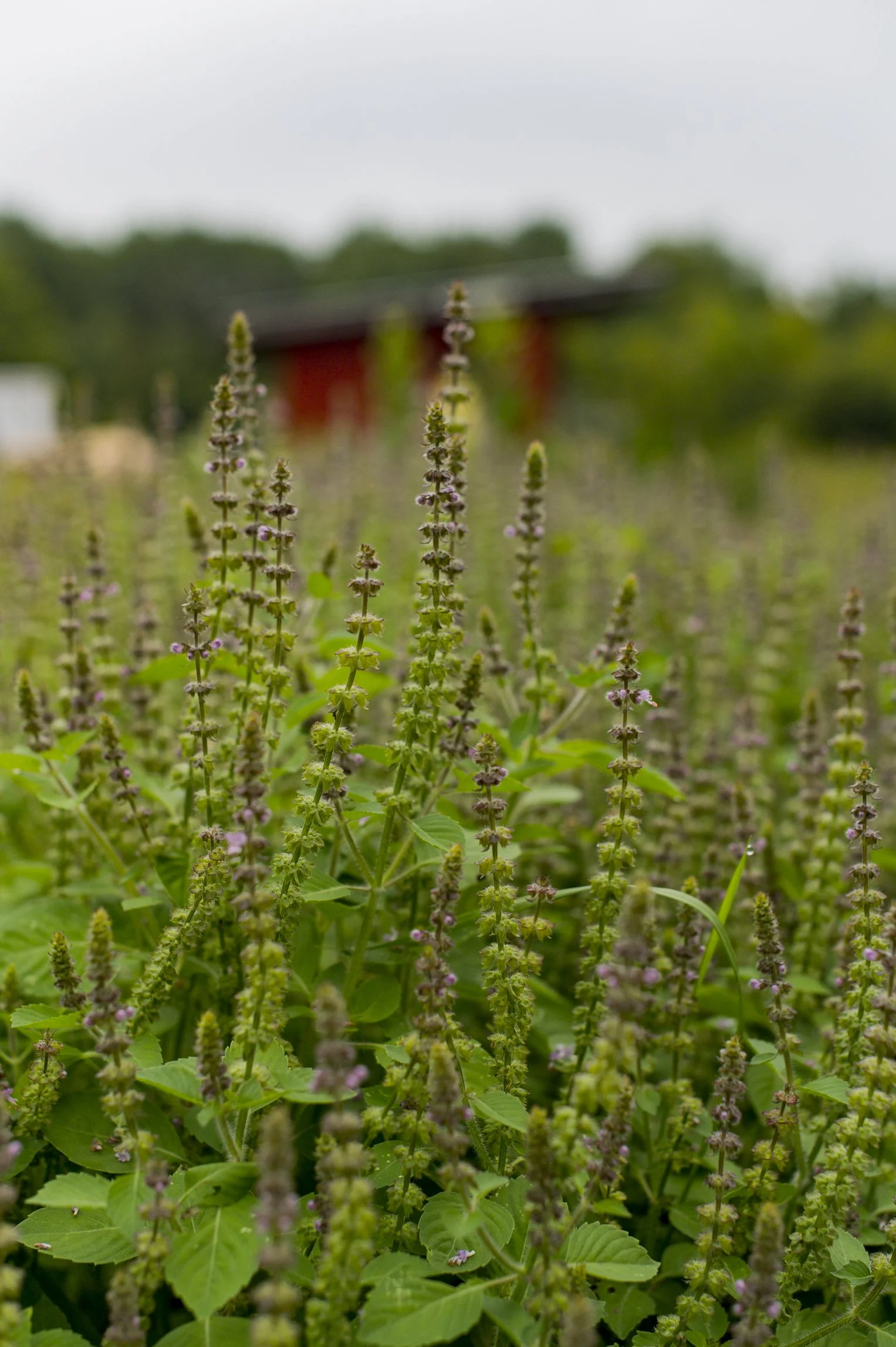
“Noga prospera”. New and improved Genovese type with superior downy mildew resistance. Compact, productive plants with uniform flat to cup-shaped leaves. Highly aromatic and ideal for pesto making.
CULTURE:
Moderately rich, moist soil. Basil is not drought tolerant and can be damaged by heat stress. Regular moisture throughout the growing season helps to ensure a good crop. Space plants 8-12 inches apart.
See basil benefits, tips, recipes, & more!